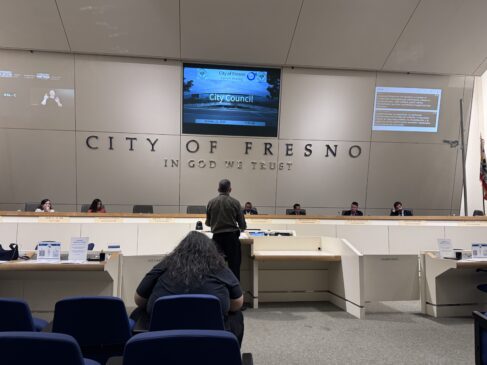
- The Fresno City Council directed the creation of an ordinance to restrict housing for sex offenders.
The ordinance could restrict the total number of group home spaces to sex offenders to 42.
City Council could approve the ordinance without knowing how many sex offenders will be left homeless.
New legal action may be coming if the Fresno City Council follows through on a ordinance restricting sex offender housing.
On Thursday, in a 6-0 vote, councilmembers directed the city attorney to craft an ordinance that requires licensing for commercial group homes and restricts the number of those homes to one per council district.
With more than 1,300 sex offenders registered in the city, and the ordinance potentially allowing no more than 42 units, “all it takes is a little arithmetic,” said Janice Bellucci, a Sacramento attorney who advocates for the rights of sex offenders.
For many registrants required to live within the city, that could mean homelessness, Bellucci said.
“There’s right now almost 1,400 people on the registry living in the city of Fresno and it’s possible that it could reduce that number to 42 that are living under a roof,” Bellucci said. “It’s not going to limit the number of people who actually reside there because there are people, for example, who are on parole that have to be living in the city of Fresno.”
Bellucci, a member of the Alliance for Constitutional Sex Offense Laws, said her group would sue the city if it passes an ordinance limiting housing. The alliance sued Fresno County in January for a rule limiting the number of sex offender residents in a single home.
City Needs to Act in Response to Decriminalization: Karbassi
Not every registrant lives in a group home, as many live in hotels, with family, or other housing, Fresno City
Councilmember Mike Karbassi, who sponsored the resolution, told GV Wire.
Karbassi, however, didn’t know how many group homes exist or how many sex offenders live in a commercial group home setting.
…
Bellucci said old data from the federal government shows a 5% recidivism rate over the lifetime of an offender.
For many on the registry, rehabilitation works, Bellucci said, and limiting housing keeps parolees from stable housing. Cases such as Funston’s are extreme cases, she said.